
listicle · 16 November 2026 · 11 min read
What Should You Ask Before Buying Abuja Property?
By Editorial Team

Last Updated: November 15, 2026
Quick Summary
Before buying Abuja property, ask about the seller's identity and right to sell, the title document and its registry verification, government acquisition status, planning and land-use approval, the survey plan, infrastructure, the developer's record, and have a property lawyer review every document before payment. Confirm each answer in writing and never pay before the registry search comes back clean.
- Write down whether the property is for a home, a long-term hold, or rental income before viewing anything.
- Ask whether land is free or under government acquisition and verify it independently at the land registry.
- Request the layout's planning approval reference and confirm it covers your specific plot, not just the estate.
- Budget beyond the asking price for legal fees, survey and registration charges, agency fees, and development levies.
- Visit in daylight, walk the boundaries, and match the survey coordinates and beacons to the physical site.
Table of Contents
- Why the Questions You Ask Decide Whether Your Abuja Purchase Succeeds
- Start With Purpose: Buyer Goals and Investment Intent
- Your Property Due Diligence Checklist for Abuja
- Questions to Ask When Buying Land: Acquisition Status and Approvals
- The Full Costs of Buying Property Beyond the Asking Price
- Your Property Inspection Checklist: What to Confirm on Site
- Red Flags and What to Do When Answers Are Unclear
- Book a Guided Inspection Before You Commit
- Frequently Asked Questions
Why the Questions You Ask Decide Whether Your Abuja Purchase Succeeds
Most bad property purchases in Abuja are not caused by fraud alone. They happen because the buyer stopped asking questions too early.
The questions to ask before buying Abuja property fall into a predictable order: purpose, budget, location, title, approvals, boundaries, and infrastructure. Skip any one of them and the risk compounds. A cheap plot with a clean survey plan but no access road is a problem.
This guide gives you the exact questions, the documents that answer them, and the red flags that should stop a transaction. Below, we break down each stage so you can verify, inspect, and confirm before you pay.
Start With Purpose: Buyer Goals and Investment Intent
The first question is not about the seller. It is about you. Are you buying a home to live in, land to hold, or a property to rent out? Each goal changes what you should inspect and how much you can afford to tie up.
For a family home, weigh proximity to work, schools, and utilities. For investment, weigh resale potential and rental demand in the neighbourhood. A plot that suits a long-term hold may be poor for short-term rental income.
Write your goal down before you view anything. Buyers who skip this step often buy on emotion, then discover the property does not serve the purpose they actually had.
Your Property Due Diligence Checklist for Abuja
A property due diligence checklist is the set of document and site checks a buyer completes before paying. It covers title, approvals, boundaries, and the physical state of what you are buying.
Use this as your working list:
- Confirm the seller's identity and right to sell
- Request the title document and verify it at the relevant land registry
- Check government acquisition status of the land
- Confirm planning and land-use approval for the area
- Review the survey plan and match it to the exact site
- Inspect access roads, drainage, electricity, and water
- Confirm the developer's reputation and delivery record
- Have a property lawyer review every document before payment
A Step-by-Step Title Verification Process
Title verification follows a clear sequence. First, obtain a copy of the title document from the seller. Second, take it to a property lawyer who can conduct a search at the land registry. Third, confirm the name on the title matches the seller and that no encumbrance or dispute is recorded. Fourth, confirm the land is not under government acquisition. Fifth, match the survey plan coordinates to the physical site.
A lawyer protects you here in a way a friend or agent cannot. If you want to understand how that relationship works, read our guide on how to use a property lawyer in Nigeria for a safe purchase. Never pay for a property before the search results come back clean.
Here is the due diligence checklist the article sets out, in the order it recommends working through it.
| Check | What to confirm |
|---|---|
| Seller's identity | Confirm the seller's identity and right to sell |
| Title document | Request it and verify at the relevant land registry |
| Acquisition status | Check whether the land is under government acquisition |
| Planning and land-use approval | Confirm approval for the area |
| Survey plan | Review it and match it to the exact site |
| Infrastructure | Inspect access roads, drainage, electricity, and water |
| Developer | Confirm reputation and delivery record |
| Legal review | Have a property lawyer review every document before payment |
Questions to Ask When Buying Land: Acquisition Status and Approvals
1. Is the land free or under government acquisition?
Land under acquisition can be revoked, and the buyer's money goes with it.
2. What is the land-use designation and are there restrictions?
3. Has the layout been approved, and by which planning authority?
Ask whether the layout has planning approval and request the approval reference.
4. What development-control requirements apply?
Development control covers setbacks, building heights, coverage, and access.
5. What documents chain the title to the seller?
Ask for the survey plan, the deed of assignment, and any Power of Attorney in the chain.
6. Who is the developer, and can they show completed projects?
Ask who built the layout and request evidence of delivered projects. Our guide on how to check property developer credibility walks through the checks that separate a serious developer from a brochure.
7. What is the exact site, and does the survey match it?
Ask for the survey coordinates and match them to the physical plot during an inspection.
Watch out: a seller who cannot produce an approval reference or who deflects a registry search is giving you an answer through the evasion, pause the transaction and seek independent legal review before any payment. If you want a broader process for spotting fraud, our guide on how to avoid property fraud with seven verification steps sets out the checks to run first.
The Full Costs of Buying Property Beyond the Asking Price
The asking price is only the largest line item, not the total cost. Buyers who budget only for the listing price routinely run short at the documentation stage, which is exactly when the deal must close.
One-off transaction costs to budget for
- Legal fees. A property lawyer's fee for drafting, reviewing, and perfecting documents should be confirmed in advance. Ask for the fee in writing and confirm whether it covers registration or only drafting.
- Survey and registration charges. If the survey plan needs to be produced or re-registered, or if the title must be perfected at the land registry, these attract separate fees. Ask who bears them under the sale terms.
- Agency or brokerage fees. Confirm the percentage, who pays it, and whether it is shared between buyer and seller. Get the figure in the offer letter, not in conversation.
- Development levies. Estates and layouts often charge a one-off levy for roads, drainage, or shared infrastructure. Ask whether it is included in the price or billed separately after purchase.
- Consent and documentation fees. Transfers of title usually require consent and stamping. Ask the seller which fees are outstanding on the property and who settles them.
- Site preparation. Fencing, clearing, and finishing are rarely included in a land price. Get a contractor estimate before you commit so the true cost is visible.
Ongoing ownership costs to plan for
- Service charges. Estates with managed security, waste collection, or shared facilities charge a periodic service fee. Ask for the current amount, what it covers, and how it is reviewed.
- Ground rent and tenancy-related charges. Some titles carry annual obligations. Confirm what is payable and whether any arrears exist on the property.
- Utilities and connection costs. Electricity connection, metering, water, and borehole costs can be significant on a new plot. Ask what is already connected and what you must install.
- Maintenance and vacancy. For a home or rental property, budget for repairs and for periods without a tenant. A rental projection that assumes full occupancy every month overstates returns.
Payment structure and what to confirm
Ask whether instalments are allowed, what the deposit is, and what happens if you miss a payment. Confirm whether the price is fixed or subject to review, and whether any fee changes between the offer and the final documentation.
Watch out: a seller who quotes a single all-in figure without a breakdown is usually hiding a charge that will surface later, insist on an itemised schedule before any money moves.
Your Property Inspection Checklist: What to Confirm on Site
A property inspection checklist turns a site visit into evidence. Visit in daylight, walk the boundaries, and confirm the plot dimensions against the survey plan. Check drainage, access roads, electricity supply, and water.
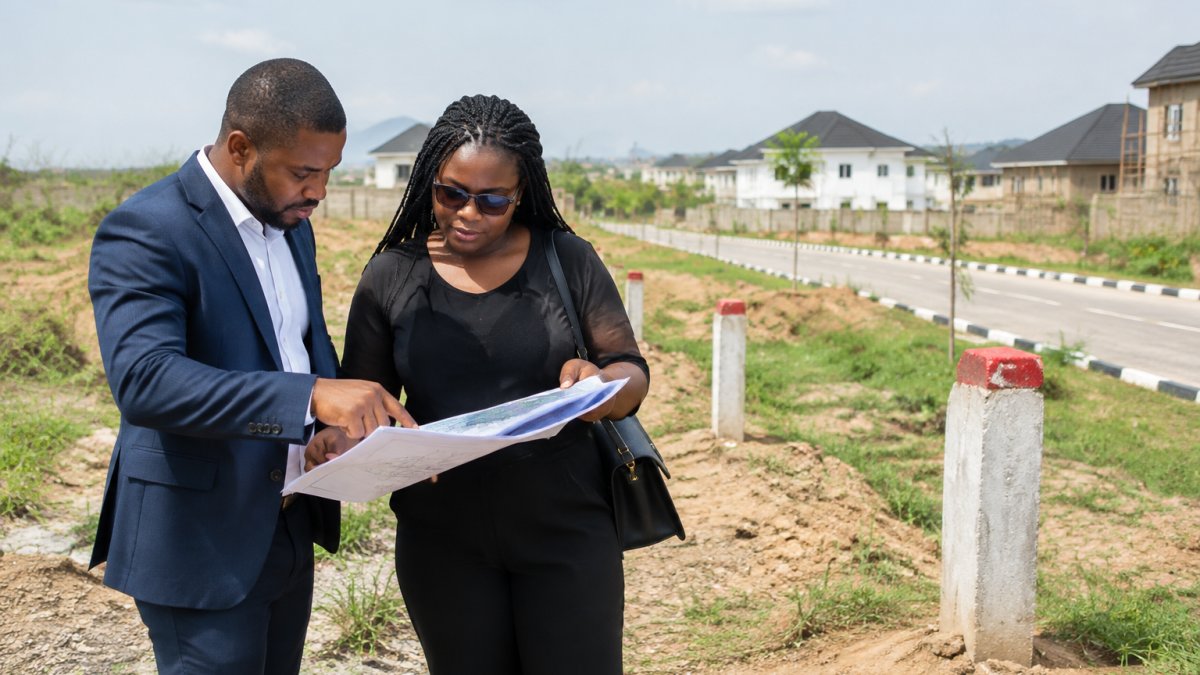
For a built home, check the finishes, the condition of the structure, and the amenities promised in the sale. For land, confirm the exact location and that the beacons match the plan.
Red Flags and What to Do When Answers Are Unclear
Vague answers are a warning, not a delay. If a seller cannot produce a title document, avoids a registry search, or pressures you to pay before verification, stop. Ask for the document in writing and give yourself time to check it.
Other red flags include a price far below the area's norm, a seller who is not the name on the title, and a layout with no visible approvals.
You can also review quick answers to common buying questions covering deposits, payment plans, titles, and inspections. A seller with nothing to hide will welcome the questions.
Book a Guided Inspection Before You Commit
The buyers who succeed are the ones who inspect before they pay, not after. Buyers who inspect before they pay are the ones who tend to succeed, so confirm the title, walk the boundaries, and see the infrastructure before you commit.
You can explore available home types, starting prices and ownership details for our Pennek Court 2 development and book a guided inspection at a time that suits you.
Buying property should not feel like a gamble. The questions in this guide give you a way to verify every claim before money changes hands.
Frequently Asked Questions
How do I verify a property's title before buying Abuja property?
Ask the seller for the title document first, whether that is a Certificate of Occupancy, a Right of Occupancy, or a registered deed of assignment. Take a copy to the relevant land registry and confirm the name on the title matches the person selling. Ask whether the land sits under government acquisition, and request FCDA or land-use approval for the development. A lawyer should search for encumbrances and any existing dispute. If the seller resists any part of this process, treat it as a reason to walk away rather than a reason to negotiate.
What documents should I check when buying land?
Request the survey plan, the title document, the deed of assignment, and a valid Power of Attorney if someone is selling on the owner's behalf. The survey plan should show the plot dimensions, boundaries and coordinates, and a surveyor can confirm they match the physical site. Cross-check the seller's identity against the name on the title. Also ask for evidence of planning approval and receipts for any fees already paid. Missing or mismatched documents are the most common cause of property disputes.
What extra costs should I budget for beyond the asking price?
The costs of buying property go well beyond the headline figure. Budget for legal fees for title searches and document preparation, survey and verification fees, agency commission, and registration or consent fees at the land registry. Newer developments may also carry service charges, estate levies and infrastructure contributions. Ask the seller for a written breakdown of every charge before you pay a deposit, and confirm which costs are fixed and which can change. Pricing depends on the property and location, so request a full quote rather than working from estimates.
How can I check whether a property has planning approval?
Ask the developer or seller for the approval document and confirm it was issued by the correct authority for that location, such as FCDA approval for land within its jurisdiction. Check that the approval covers the specific plot and the type of development being built, not a neighbouring site. Visit the approving office to confirm the reference number is genuine. If the seller cannot produce approval or the document covers a different plot, pause the transaction until it is resolved.
