
blog · 19 October 2026 · 14 min read
Best Rental Yield Areas: A 2026 Investment Guide
By Editorial Team

Table of Contents
- Understanding Rental Yield and Why Location Matters
- How to Calculate Rental Yield on Property
- Top Rental Yield Areas by Investment Potential
- Short-Let Apartment Investment in Lagos: High-Yield Strategy
- Rental Property Investment Checklist
- Risks, Due Diligence, and What to Verify Before Investing
- Conclusion: Building Wealth Through Strategic Rental Investment
- Frequently Asked Questions
Last Updated: October 19, 2026
Understanding Rental Yield and Why Location Matters
Rental yield is annual rental income as a percentage of purchase price or market value. It separates wealth-generating properties from idle capital, and location determines everything: two identical buildings can produce vastly different returns.
The best rental yield areas in Lagos deliver consistent tenant demand, stable appreciation, and cash flow. Investors who focus on yield-driving locations compound their portfolios far more effectively than those chasing prestige addresses.
An 8% yield in a growing corridor outperforms a 3% premium-area property, and the compounding effect becomes dramatic within five years.
How to Calculate Rental Yield on Property
Understanding how to calculate rental yield on property is non-negotiable before committing capital, yet most investors skip the steps that reveal the true picture.
Gross rental yield divides annual rental income by purchase price: a ₦50 million property collecting ₦4 million in annual rent yields 8%. But gross yield ignores reality.
Net rental yield subtracts operating costs, maintenance, management fees, insurance, taxes, and vacancy from rental income before dividing by purchase price. That same property with ₦1.5 million in annual costs produces ₦2.5 million net income, a 5% yield.
The gap between gross and net tells you whether an investment is sustainable or a trap. Many investors chase gross yields without calculating net, then wonder why their cash flow disappears.
Gross vs Net Rental Yield
Gross rental yield shows what the property could theoretically earn without deductions: divide total annual rental income by purchase price, then multiply by 100.
Example: A ₦40 million property renting for ₦3.2 million annually has a gross yield of 8%.
Net rental yield is what actually matters. It accounts for every cost: property management (typically 5-8% of rent), maintenance reserves (1-2% of value annually), insurance, taxes, and realistic vacancy assumptions (5-10% of months unfilled).
Using the same example: After ₦1.2 million in annual costs, net yield drops to 4.5%. That's the real return flowing to your account.
Most guides skip net yield because honest numbers look less impressive in marketing materials. We include it because you're building wealth, not collecting vanity metrics.
Top Rental Yield Areas by Investment Potential
These areas combine tenant demand, rental income potential, and appreciation. To compare them fairly, every area below uses the same method: a representative two-bedroom apartment, a stated purchase price, an achievable annual rent, a 10% vacancy assumption, and a standard operating-cost load (management at 7% of rent, maintenance at 1.5% of value, insurance and land-use charges, and a management reserve). Figures are indicative ranges from agent listings and completed-lease reports; they are a starting point for your own verification, not a valuation.
Lekki and the Lekki Corridor
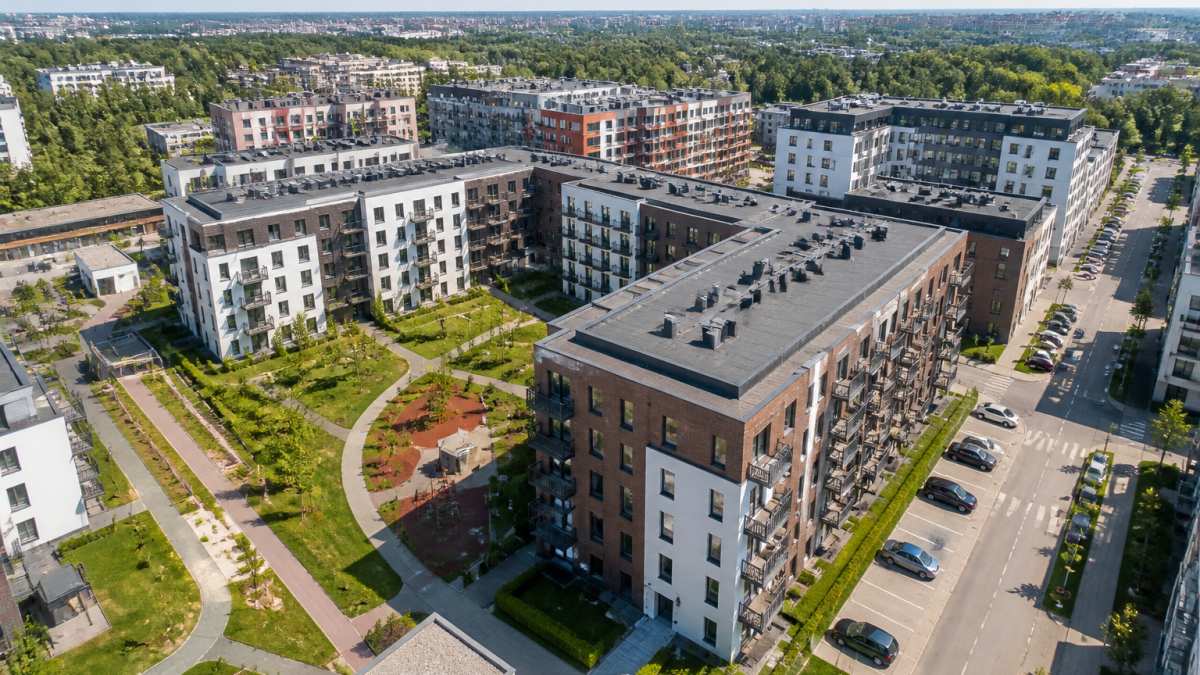
Lekki remains the highest-demand rental market, driven by consistent professional tenant pools and infrastructure investment. Two-bedroom apartments rent for ₦800,000-₦1.2 million monthly; three-bedroom units for ₦1.5-₦2.2 million. Purchase prices range from ₦80-₦150 million depending on location and finish quality.
Run the method on a representative two-bedroom at ₦100 million with annual rent of ₦12 million (₦1 million monthly). Gross yield is 12%.
What Lekki loses in raw yield it gains in capital appreciation and tenant stability. Vacancy stays low because demand exceeds supply, and the corridor continues southward through Ajah as roads, schools, and shopping centres expand.
Ibeju-Lekki: The Emerging Growth Corridor
Ibeju-Lekki represents the frontier for yield-focused investors. Properties cost 40-50% less than equivalent units in central Lekki, yet rental income potential is catching up as the area develops. Two-bedroom apartments rent for ₦400,000-₦650,000 monthly; three-bedroom units for ₦700,000-₦1.1 million.
On a representative two-bedroom at ₦45 million with annual rent of ₦6.6 million (₦550,000 monthly), gross yield is 14.7%. After 10% vacancy (₦660,000), management at 7% (₦462,000), maintenance at 1.5% of value (₦675,000), and insurance plus charges of about ₦350,000, net income is roughly ₦4.45 million, a net yield of about 9.9%.
This area suits investors comfortable with moderate risk for higher current income. The infrastructure trajectory is real, roads, commercial zones, and residential projects are under construction, but verify construction quality and service-charge levels before assuming the headline yield holds.
Yaba and Surulere: Established Demand
These older, densely populated areas offer reliable rental income without the premium price tags of newer developments. Yaba attracts young professionals and students; Surulere draws families and long-term tenants. One-bedroom apartments rent for ₦300,000-₦500,000; two-bedroom units for ₦500,000-₦800,000.
Property prices reflect age and density: ₦30-₦60 million for comparable units. On a representative two-bedroom at ₦40 million with annual rent of ₦7.2 million (₦600,000 monthly), gross yield is 18%.
The advantage here is consistent, unglamorous tenant demand: steady cash flow without headlines. Capital appreciation is modest compared with growth corridors, making these areas better for income-focused investors than those betting on rapid value growth.
Ajah and Sangotedo: Mid-Range Returns
Ajah occupies the middle ground between premium Lekki and emerging Ibeju-Lekki. Two-bedroom apartments rent for ₦600,000-₦900,000; three-bedroom units for ₦1-₦1.5 million. Purchase prices range from ₦50-₦90 million.
On a representative two-bedroom at ₦65 million with annual rent of ₦9 million (₦750,000 monthly), gross yield is 13.8%. After 10% vacancy (₦900,000), management at 7% (₦630,000), maintenance at 1.5% of value (₦975,000), and insurance plus charges of about ₦450,000, net income is roughly ₦6.05 million, a net yield of about 9.3%. Sangotedo, slightly further south, offers similar dynamics with marginally lower prices and marginally higher yields due to newer construction and lower occupancy costs.
These areas suit balanced investors seeking moderate yields with reasonable appreciation. Tenant demand is strong without being saturated, and values are rising as infrastructure extends southward.
Property type and tenant segmentation
Yield also depends on what you buy and who rents it. Self-contained and room-and-parlour units in Yaba and Surulere attract students and young professionals, with frequent turnover and higher management intensity but strong occupancy. Two- and three-bedroom apartments in Lekki and Ajah attract families and corporate tenants on longer leases, with lower turnover and higher service charges. Detached and semi-detached houses in premium corridors serve expatriate and senior-professional tenants, with longer voids but premium rents. Match the property type to the tenant pool you can actually serve, and price the management effort into your net-yield model.
Short-Let Apartment Investment in Lagos: High-Yield Strategy
Short-let apartments generate substantially higher gross yields than long-term rentals, often 15-20% annually, but carry higher operational complexity and costs. They rent nightly or weekly to tourists, business travellers, and visiting professionals at premium rates.
A three-bedroom apartment in Lekki renting for ₦1.5 million monthly on long-term lease generates 8-10% gross yield. The same unit operating as a short-let might generate ₦2-₦2.5 million monthly (₦60,000-₦80,000 nightly), pushing gross yield to 18-24%.
But short-let economics demand careful analysis. Management companies charge 20-30% of revenue, cleaning and maintenance run higher due to turnover, utilities spike with constant occupancy, and vacancy assumptions must be realistic (assume 30-40% of nights unfilled, especially outside peak seasons).
Net yields on short-let properties typically fall to 6-10% after costs, still competitive with long-term rentals but with substantially higher operational stress.
Rental Property Investment Checklist
Before committing to any property, verify these fundamentals:
- Property title is registered with the Land Registry and free of encumbrances
- Tenant demand in the area has been stable or growing over the past 24 months
- Comparable rental rates in the area support your yield projections
- Operating costs (management, maintenance, taxes) have been realistically budgeted
- You've toured the property and verified construction quality
- The developer or seller has a verifiable track record of completed projects
- Your net yield (after all costs) meets your target return threshold
- You've accounted for vacancy periods in your cash flow projections
- The property's location aligns with long-term infrastructure plans
- You understand the tax implications and have consulted a tax advisor
- Your financing (if any) terms are fixed and affordable relative to rental income
Most investors skip the tedious items, title verification, cost verification, comparable analysis, then wonder why their investments underperform. These details separate wealth-building investments from wealth-destroying mistakes.
Risks, Due Diligence, and What to Verify Before Investing
Rental property investment carries real risks, and the best yield means nothing if the property does not deliver it.
Title and ownership risk is the most critical.
Construction and developer risk. Verify the developer's completed projects, not just renders.
Flooding and infrastructure risk. Ask about drainage, elevation, and flooding history on the specific street, not just the estate.
Tenant and income risk. Reliable tenants can disappear; problem tenants create months of vacancy and legal costs.
Operating-cost risk. Underestimated service charges, maintenance, and management fees quietly erode yield.
Liquidity risk. Some locations sell quickly; others can take months to find a buyer.
Regulatory and tax risk. Land-use charges, tenancy rules, and local government policies can change.
Land Registry guidelines on property title verification
Nigerian Institution of Estate Surveyors and Valuers standards for property valuation
Conclusion: Building Wealth Through Strategic Rental Investment
Rental yield areas in Lagos offer genuine wealth-building potential when approached with discipline and realistic expectations.
At Pennek, we help investors navigate this complexity with transparent analysis of rental market dynamics, realistic return estimates before you invest, and clear guidance through acquisition. We understand what makes properties generate reliable income.
The best rental yield areas balance three elements: strong current income, realistic appreciation potential, and manageable risk. Choose locations aligned with infrastructure development, verify your numbers ruthlessly, and build your portfolio with properties that deliver consistent cash flow.
Land Registry guidelines on property title verification
Central Bank of Nigeria guidance on property investment and financing
Nigerian Institution of Estate Surveyors and Valuers standards for property valuation
Frequently Asked Questions
How do you calculate rental yield on a property?
Rental yield is calculated by dividing annual rental income by the property's purchase price, then multiplying by 100 for a percentage. For example, if a property costs ₦50 million and generates ₦3 million in annual rent, the gross yield is 6%. To find net yield, subtract operating costs (maintenance, property tax, insurance, vacancy allowance) from annual rent before dividing by purchase price. Most investors aim for 8-12% gross yield in high-demand areas, though net yield after costs typically ranges 5-8%.
What's the difference between short-let and long-term rental income?
Short-let apartments (daily or weekly bookings) typically generate 15-25% higher annual income than long-term rentals because nightly rates are higher. However, short-lets require active management, higher vacancy risk, and increased maintenance costs. Long-term rentals offer stable, predictable cash flow with lower operational overhead. Your choice depends on available time and risk tolerance.
Which areas in Lagos have the highest rental yields?
Lekki, Victoria Island, and Yaba command premium prices due to high demand and capital appreciation. Ibeju-Lekki and emerging corridors offer strong yields because property costs are lower while rental demand is rising. Affordable areas like Epe and Ikorodu can deliver competitive yields, though tenant quality and occupancy rates vary. The highest yields are in emerging areas with infrastructure development, but established areas offer lower risk and more stable tenant demand.
What should I check before investing in a rental property?
Verify the property title through the Land Registry and confirm the developer's track record. Calculate realistic net yield by accounting for property taxes, insurance, maintenance, and vacancy rates. Inspect the property condition and understand the tenant demographic. Research the area's infrastructure plans, rental demand, and comparable rent prices. Confirm the developer's financial stability and completion timeline. For off-plan purchases, ensure a clear escrow or protection agreement is in place.