
blog · 13 October 2026 · 14 min read
Best Locations for Real Estate: 2026 Investor Guide
By Editorial Team

Table of Contents
- How We Ranked the Best Locations for Real Estate in 2026
- Lekki and Ajah: Rental Income That Pays for Itself
- Ikeja and Ogun Border Towns: Affordability Meets Infrastructure
- Abuja Districts: Where Property Appreciation Rates Stay Steady
- Real Estate Investment Opportunities for Different Budgets
- Real Estate Due Diligence: What to Check Before You Pay
- Risks and Downsides of Emerging Locations
- Conclusion
- Frequently Asked Questions
Last Updated: October 13, 2026
How We Ranked the Best Locations for Real Estate in 2026
Finding the best locations for real estate in 2026 comes down to six measurable criteria: rental yield, infrastructure momentum, title clarity, entry affordability, tenant demand, and exit liquidity. This guide from Pennek scores each area against those criteria so you can compare locations on evidence rather than hype.
Real estate investment is the purchase of land or property to generate rental income, capital appreciation, or both. Location matters more than finish: a modest unit in a high-demand corridor will outperform a luxury unit in a thin market.
The Six Criteria Behind Every Score
We score every location out of 10 across six weighted factors:
Criterion | What We Measure | Weight |
|---|---|---|
Rental yield | Gross and net income against purchase cost | 25% |
Infrastructure | Roads, power, drainage, planned development | 20% |
Title clarity | Quality of documentation and transferability | 20% |
Affordability | Entry price against average buyer budget | 15% |
Tenant demand | Occupancy rates and tenant profile | 10% |
Exit liquidity | Ease of resale and time to close | 10% |
A common mistake is weighting appreciation above everything else. Appreciation you cannot cash out is not a return. We weight yield and title first because they protect your capital when the market slows.
Lekki and Ajah: Rental Income That Pays for Itself
Lekki and Ajah score highest on rental yield because tenant demand from young professionals and returning diaspora keeps occupancy strong.
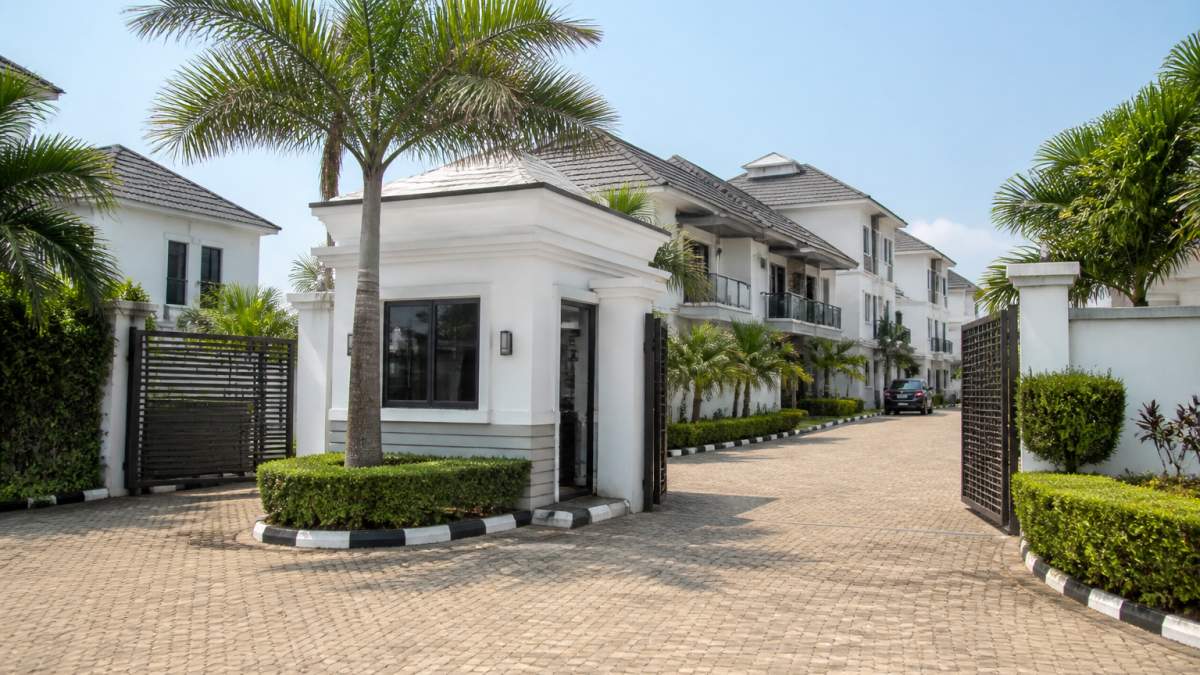
For rental income, serviced units in established estates hold tenants longer than standalone builds. The trade-off is higher entry cost.
Ikeja and Ogun Border Towns: Affordability Meets Infrastructure
Affordability and infrastructure are converging along the Ikeja axis and the border towns, making this the strongest entry point for first-time buyers. Land prices remain accessible while road and power improvements close the gap with established districts.
But "the border towns" is not one market. It is at least four distinct submarkets, and treating them as one is how buyers end up with a plot that looks cheap on paper and impossible to resell.
The Submarkets That Actually Matter
Submarket | Typical Buyer | Entry Profile | Main Driver |
|---|---|---|---|
Ikeja GRA and inner Ikeja | Owner-occupier, corporate tenant | Highest entry in this band | Proximity to airport, corporate offices, established services |
Agege and Dopemu fringe | First-time landlord | Mid entry, older housing stock | Road rehabilitation, access to Ikeja employment |
Mowe and Ibafo corridor | Land banker, long-hold buyer | Lowest entry, largest plot sizes | Commuter belt along the Lagos-Ibadan expressway |
Simawa and Sagamu fringe | Patient capital, diaspora buyer | Low entry, thin resale market | Newer estates, longer infrastructure timeline |
Ikeja GRA and inner Ikeja is the most mature submarket.
Agege and Dopemu fringe offers the best balance for a first-time landlord.
Mowe and Ibafo is a land-banking market, not a rental market. Plots are larger and entry lower, but assume a long hold.
Simawa and Sagamu fringe is the most speculative. Newer estates are developing, but resale is thin.
What Infrastructure Actually Changes
Infrastructure splits into three variables that affect value differently:
- Access roads. A motorable road year-round changes a plot from land-banking stock into buildable stock, the single largest value trigger in the corridor.
- Power. Grid supply, estate generator, or solar changes your service charge and your tenant's cost of living. A unit on unreliable power needs a higher rent to compensate, and that caps your yield.
- Drainage. The one buyers underestimate. Poor drainage shortens a building's useful life and raises maintenance costs, and it is the hardest to fix after purchase.
Typically access roads arrive first, power second, and drainage last, if at all. Price your entry accordingly.
Rental Demand and Tenant Profile
Tenant demand here comes from people who work in Ikeja but cannot afford Ikeja GRA, a stable pool of salaried employees and small business owners. Rent is often paid monthly rather than annually, which raises administrative burden and arrears risk. Build that into your net yield rather than comparing gross figures against a Lagos Island unit that collects annually.
The Risks Specific to This Band
The risk here is uneven development: some streets have drainage and tarred roads, the next does not. Verify the specific plot, not the general area, and visit during the rainy season if you can, that is when drainage problems announce themselves.
- Confirm the road leading to the plot is motorable year-round
- Check whether the estate has a functioning residents' association
- Ask what the power arrangement is: grid, estate generator, or solar
- Verify the survey plan against the actual coordinates on site
- Confirm whether the land sits under a government acquisition or a road setback
Abuja Districts: Where Property Appreciation Rates Stay Steady
Property appreciation rates in the established districts are steadier than in fast-moving satellite areas, suiting investors who prioritise capital preservation. Government, diplomatic, and corporate tenancy keeps demand less sensitive to speculative swings.
The useful version is district by district, because tenancy cycle, documentation quality, and resale liquidity differ sharply.
District-by-District Breakdown
District | Dominant Tenant | Tenancy Cycle | Resale Liquidity |
|---|---|---|---|
Maitama | Diplomatic missions, senior executives | Multi-year, often renewed | Strong but slow, small buyer pool |
Asokoro | Government officials, international staff | Multi-year | Strong, similar to Maitama |
Wuse II | Corporate offices, mid-senior staff | Annual to multi-year | Good, larger buyer pool |
Garki | Civil servants, small businesses | Annual | Good |
Jabi and Utako | Young professionals, retail-adjacent | Annual | Good, more active turnover |
Lugbe and Kubwa (satellite) | First-time renters, commuters | Annual, higher turnover | Moderate, more supply |
Maitama and Asokoro are capital-preservation markets.
Wuse II and Garki are the middle of the market: broader demand, shorter tenancy cycles, easier resale.
Jabi and Utako behave like a young-professional market: higher turnover and more vacancy gaps, but a deeper, more active buyer pool.
Lugbe and Kubwa are satellite districts with lower entry, larger supply, and higher turnover, rental-income plays with more management overhead, not capital-preservation plays.
Why Appreciation Is Steadier Here
The mechanism is tenancy, not sentiment. A mission or corporation signs against an already-approved budget and does not move because the market dipped.
The second mechanism is documentation. Stronger title quality means transactions close without the delays that plague disputed land elsewhere, supporting steadier pricing.
The third is land scarcity. The established districts are largely built out, so price competition is between buyers of existing stock rather than between developers.
The Trade-Off: Yield Versus Reliability
The trade-off is entry cost and slower yield: gross yields in prime districts often sit below comparable Lagos corridors. What you gain is documentation quality and a tenant profile that pays reliably, worth the lower headline yield for diaspora buyers who cannot inspect regularly.
Diaspora buyers often underestimate the management cost of a prime district unit. A diplomatic tenant expects a responsive property manager who maintains to a standard, a real cost that comes out of net yield, not gross.
What to Verify Before You Buy
- Confirm the title type and search it at the relevant land registry
- Confirm the district's land use, residential, mixed-use, or commercial
- Ask for the tenancy history of the specific unit, not the district average
- Confirm the service charge and what it covers
- Check whether the property sits under any acquisition or setback
Real Estate Investment Opportunities for Different Budgets
The right location depends on your budget and your goal, not on which area is trending. Here is how we would match budget bands to strategy:
Budget Band | Best-Fit Strategy | Location Type |
|---|---|---|
Entry level | Land banking, long hold | Emerging border towns |
Mid range | Rental unit, serviced estate | Ikeja axis, Ajah |
Upper mid | Completed home plus rental | Lekki corridor |
Premium | Capital preservation, prime tenancy | Established Abuja districts |
If your savings are in pounds or dollars, factor the exchange rate into your entry decision. A favourable rate lowers your effective cost, but you cannot time it reliably. Many diaspora buyers split payments across two or three instalments to average out the rate.
Real Estate Due Diligence: What to Check Before You Pay
Real estate due diligence is verifying ownership, documentation, and physical condition before money changes hands. Skipping it is the most expensive shortcut in property. Our checklist:
- Confirm the title type: Certificate of Occupancy, Governor's Consent, or registered deed
- Search the title at the relevant state land registry
- Verify the survey plan coordinates against the physical plot
- Check for government acquisition or road setback on the land
- Confirm the seller's identity matches the title documents
For off-plan purchases, payment structure matters as much as price. Stage payments tied to visible milestones protect you better than a single large deposit, ask for a written schedule linking each payment to a completed stage.
Risks and Downsides of Emerging Locations
Emerging locations carry real risks, and any guide that skips them is selling rather than advising. The main downside is timing: promised infrastructure can take longer than expected while your capital is tied up.
Other risks worth pricing in:
- Title risk. Some fast-selling areas have disputed or unregistered land.
- Liquidity risk. Resale in a thin market can take months.
- Cost creep. Service charges and levies often rise after handover.
- Currency risk. If you earn abroad and pay in naira, rate movement cuts both ways.
Conclusion
Choosing the best locations for real estate is a discipline, not a guess. Rank each area against yield, title, infrastructure, and exit liquidity before committing a single naira.
At Pennek, we built our business around this problem. With over 15 years of experience in creating residential communities, we provide end-to-end support across procurement of premium land and housing, tailored investment solutions that balance affordability with long-term value, and transparent processes to estimate mortgage repayments and returns before you buy.
Get started with Pennek and build your property portfolio on verified titles and clear numbers.
Frequently Asked Questions
Where are the best places to invest in real estate in Nigeria for high rental yields?
Lekki Phase 1 and Ajah consistently deliver strong rental yields because of tenant demand from professionals working on the Lekki-Epe corridor. Ikoyi and Victoria Island offer lower gross yields but attract corporate tenants who pay premium rents. In Abuja, kubwa remain reliable for rental income. The key is matching the location to your target tenant demographic rather than chasing the highest headline yield.
What factors should I consider when choosing a real estate location?
Focus on five things: population growth and migration patterns, employment and economic development nearby, existing infrastructure and planned development, rental demand and tenant demographics, and current property prices relative to your budget. Also check title documentation and borrowing costs. A location with strong fundamentals in all five areas protects your capital better than one that only looks cheap today.
How does infrastructure development impact property value in new locations?
Roads, drainage, power supply, and planned development directly affect property appreciation rates. When a major road or estate infrastructure is completed, property values in surrounding areas typically rise because access improves and more buyers enter the market. Areas with confirmed government or private infrastructure projects tend to outperform locations where development is only rumoured.